

Why the hardest part of leaving the Defence Force isn’t finding work, and what business ownership can rebuild if you don’t try to do it alone.
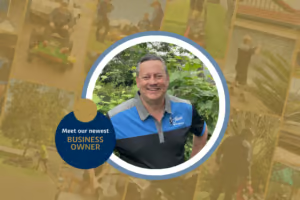
On one of his first days in a civilian office, the thing that threw Greg Morrison wasn’t the work. It was that he couldn’t tell who was in charge.
There was a young bloke in a polo shirt who turned out to be the chief financial officer. There was an older gentleman in a three piece suit sitting in the corner who turned out to be Brian from accounts. After eight years in the Air Force, Greg had never once had to guess. You looked at a person’s shoulder, you read the rank, and you knew exactly where everyone stood. Out here, nobody was wearing the answer.
It sounds like a small thing. It isn’t. That moment captures something almost nobody warns you about when you leave a highly structured environment like the military. You don’t just lose a job. You lose the scaffolding that told you where you fit, who to ask, how the day was shaped, and where your community was. For a lot of people, that invisible loss is far more confronting than the career change itself.
This is the idea worth sitting with, especially if you are one of the many Australians thinking about starting a business after the military. Your skills will almost certainly transfer. The structure around them will not. Understanding that difference early is one of the most useful things you can do before you make your next move.
The part of the transition nobody prepares you for
Ask most people leaving defence what worries them, and they will usually point to work. Will my skills be valued? Will I find a job? Can I hold my own in a civilian workplace?
For Greg, those turned out to be the easy questions. He had worked in IT in the Air Force, a skill set that transferred readily into employment. He was confident in what he could do. What surprised him was everything sitting outside the job description.
In the Defence Force, life is contained. Need a dental appointment, it’s speed dial. Want to play sport, it’s organised. Looking for advice on which school to send the kids to, the neighbour three doors down has been through it and will tell you straight. There is a built in community of people who share a common background, and you can wave at a stranger on base and strike up a conversation because you already have something in common.
Step outside that, Greg found, and the silence can be louder than expected. New suburb. Neighbours you don’t know. No shared uniform to break the ice. No obvious way to join the cricket team when the cricket team isn’t in the building next door.
“If you sit and dwell, it’ll build up inside you. You need to be social for your mental health.”
That is not a soft observation. It is one of the most practical points in the whole conversation. The transition out of a structured organisation is as much a psychological shift as a professional one, and pretending otherwise is how people end up isolated at exactly the moment they can least afford it.
Why the skills were never really the problem
Here is where a lot of people get caught out, and it applies well beyond the military.
Being good at something makes you confident you can build a business around it. A skilled tradesperson looks at their trade and sees a business. An experienced professional looks at their expertise and sees a business. In a narrow sense, they are right. The skill is real.
But running a business is not doing the task. It is everything around the task. Marketing. Quoting. Cash flow. Scheduling. Compliance. Client acquisition. Pricing. Administration. Knowing what your work is actually worth and having the nerve to charge it.
Greg knew his industry inside out. What he didn’t know was how to register a business, what to ask his accountant, or how to market himself. As he put it, the list goes on and on.
“When you start a business, there are a thousand things you don’t know.”
None of those thousand things are about being good at the job. They are the scaffolding again, the invisible structure that has to exist for the work to turn into an income. In employment, someone else built that scaffolding for you. In the military, the entire institution was the scaffolding. Start a business alone, and you are handed the job of building all of it yourself, in real time, while also trying to earn a living and learn the ropes.
That is the trap. People leave one structured world assuming the hard part is the skill, when the skill is the one part they have already sorted.
Rebuilding the scaffolding instead of removing it
This is where the choice of how you start a business matters more than most people realise.
Go it completely alone, and in a real sense you recreate the isolation you just left. No colleagues. No clear shape to the day. No one to ask when a question comes up that you have never faced before. For someone coming out of an environment where support and community were simply part of the furniture, that can be a jarring second transition on top of the first.
Greg looked at several supported structures before choosing James Home Services and moving into a cleaning business, a complete industry shift from IT. What drew him wasn’t a logo or a sales pitch. It was that the model plugged the gaps he knew he had. The business registration he didn’t know how to set up. The accountant questions he didn’t know to ask. The marketing he had never had to do. A business coach who had actually built a business rather than just read about one.
“It just felt like you plugged a lot of gaps in regards to what I needed to be able to run a business, as against trying to do it myself.”
In other words, the right structure doesn’t remove your independence. It rebuilds the scaffolding so you can stand your business up on top of it. For someone leaving the military, that is a familiar and reassuring shape: clear systems, people who have your back, and a community around the work. Not a uniform, but the same underlying idea.
What the transition actually asks of you
Two themes came up again and again in Greg’s advice, and both are worth taking seriously before you start anything.
The first is money. Life inside defence often comes with subsidised housing and lower everyday costs, and stepping back into the real world can be a genuine shock to the household budget. Greg’s advice is blunt and correct: understand your financial position first. Know how long you can last if things don’t go the way you planned, because that number changes every decision you make afterwards.
“Nothing is as incentivising as knowing you’re running out of money.”
The second is commitment. Building a business that eventually gives you flexibility and time with family, which is exactly what Greg was after, means working hard up front, and not for a week or a month. He talks about committing seriously for a couple of years, sacrificing some of that lifestyle early to earn it back later. The reward was real. He stopped losing three hours a day to a commute, knocked off in time to kick the footy with his kids, and built a business he ran for six years before selling it. But the flexibility came after the effort, not instead of it.
There is also the discipline piece, and this is where military experience genuinely pays off. Turning up when you don’t feel like it. Doing the work until the work is done. As Greg puts it, if you are the business owner and you don’t work, you don’t get paid. It’s as simple as that. That mindset, drilled in over years of service, is one of the most valuable things a veteran brings to business ownership.
Practical takeaways: if you’re considering starting a business after service
- Separate the skill from the structure. Your trade or profession is an asset, not a business plan. Write down what you actually know about marketing, cash flow, quoting, compliance and systems. The gaps are where the real work is.
- Understand your financial runway first. Before anything else, work out how long your household can last if income is slow to start. That single number should shape how, and when, you begin.
- Plan for a real commitment window. Expect to work hard for a couple of years to build something that gives back time later. Flexibility is the reward, not the starting condition.
- Protect your community deliberately. Leaving a structured organisation can be isolating. Join something. Sport, the gym, a local group, whatever gets you connected. Treat it as part of the transition, not an afterthought.
- Look for support that fills your specific gaps. If you go the supported or franchise route, ask what they actually do for you: business setup, coaching, marketing, and people you can call. Vague reassurance is not support.
- Ask who’s coaching you and what they’ve built. Advice from someone who has run and sold a real business is worth far more than advice from someone who has only studied it.
- Learn your numbers early. Not everything that comes in the door is profit. Understanding tax, expenses and what you actually take home is one of the most common things new owners get wrong.
Final reflection
The story running through this episode isn’t really about the military, or cleaning, or franchising. It’s about what happens when someone steps out of a world that held everything together and has to build that structure again for themselves.
The people who struggle in that moment usually aren’t short on ability. They are short on scaffolding, and the culture around them tends to celebrate independence while quietly leaving them to figure out the hardest parts alone. That is true for veterans, and it is true for almost anyone starting a business.
“There’s so much opportunity out there to do what you want to do. But like everything, you have to make it happen.”
Greg’s point is worth holding onto. The opportunity is real. So is the work. The smart move isn’t to prove you can do all of it unaided. It’s to rebuild the structure that lets you do your best work, and then get on with it.
Frequently Asked Questions
What’s the hardest part of transitioning out of the military? For many people it isn’t finding work or transferring their skills. It’s the loss of structure and community that the Defence Force provides automatically. Everything from daily routine to social connection to knowing where you fit is built in during service, and rebuilding that on the outside is often more confronting than the career change itself.
Do military skills transfer to business ownership? Some do, and powerfully. Discipline, work ethic, and the ability to turn up and do the work until it’s done are exactly what business ownership demands. Technical skills often transfer too. What doesn’t transfer automatically is the business knowledge sitting around the work: marketing, quoting, cash flow, compliance and systems. Those have to be learned or supported.
Should I start a business after leaving the Defence Force? It can be a strong path, particularly if you want to control your time and rebuild income after a career change. But it depends on your financial position, your appetite for a couple of years of hard work up front, and whether you go it alone or with support. Understanding those factors honestly matters more than the decision itself.
Is franchising a good option for veterans? For some people, yes. A supported structure can suit veterans well because it echoes something familiar: clear systems, people who have your back, and a community around the work. The key is checking what the support actually involves and whether the model is built around your success or just your fees.
How do I cope with losing structure and routine after service? Build new structure deliberately rather than waiting for it to appear. That means a routine to your day, and just as importantly, active involvement in a community. Sport, the gym, local groups, anything that gets you connected. This is a mental health priority, not a nice to have, and it should be part of the transition plan from day one.
How much money do I need to start a business after the military? There is no single figure, because it depends on the business. What matters more is understanding your financial runway: how long your household can last if income is slow to build. Life outside defence often costs more than life inside it, so map your real costs honestly before you commit.
What support do you get with a James Home Services business? The network handles a large amount of the setup before launch, including business registration, systems, compliance and marketing groundwork. New owners then receive several days of business coaching, practical on the ground training, and a structured follow up period, with an ongoing coach they can call one on one when questions come up.
Is business coaching actually worth it for a first time owner? For most people, yes. The value isn’t only the advice. It’s having someone who has already built a business helping you avoid the expensive, invisible mistakes that you can’t see until you’re already making them. Quoting at your real worth, reading your numbers, and staying focused on your goals are common areas where coaching makes a measurable difference.
What are the most common mistakes new business owners make? Underestimating how many different things a business requires, neglecting marketing early on, misunderstanding their financials (assuming everything that comes in is profit), and easing off once they hit break even instead of resetting their goals. Seeking help too late, because it feels like admitting weakness, is another big one.
Explore The Real Franchise and learn from real conversations with people building businesses through James Home Services.
More Information on subscribing to your own business
Want to speak to a real person about joining our network? Get in touch directly with our National Director of Sales; Justin Kelly on 0438 780 363
Want us to contact you? Submit an enquiry